


Table of Contents
Contact is not compromise. A malicious ping is not a data breach. The fight is not over when an adversary touches your network. It has only just begun.
In the minds of many cybersecurity operators, the ‘initial contact’ notification is often treated like a signal of failure. We’ve been conditioned to believe that if a malicious ping reaches our network, the perimeter has failed and the battle is lost. Hence, many IT security professionals view Network Detection and Response (NDR) as reactionary because it acts after the initial contact occurs. This is a huge misunderstanding of modern warfare.
In the Cyber Kill Chain, the initial contact is merely the first link. If you break the chain immediately after contact, you have not reacted to a disaster. You have proactively found an attack and stopped it.
Real security is not about the impossible goal of zero contact. It is about the speed of your response.
Fast Facts: Redefining Proactive Security
|
Does a Contact With an IoC Mean You Are Compromised?
No. Contact with an Indicator of Compromise (IoC) simply means an attempt was made. A device contacted a malicious domain, or a user clicked a link. This is the ‘knock on the door’, not the theft of the valuables.
For many defenders, however, this distinction is lost. When you see that notification, the immediate reaction is a sense of failure. But this anxiety is misplaced. We live in a world where clouds talk to clouds and users are constantly online. Expecting a firewall to manage all contacts without additional context is not only unrealistic but technically unfeasible: IoCs number in the millions yet the largest blocking list a firewall can support is no more than 500 thousand.
To survive, you must widen the gap in your mind between contact and compromise. Contact is an attempt. Compromise is a loss of control. There is a significant time gap between these two events. That gap is where you win.
How Do Defenders and Adversaries View a Breach Differently?
When an adversary successfully slips past the perimeter, there are defenders that see it as a total defeat. On the other hand, adversaries view it merely as step one.
This difference in perspective creates a critical psychological disadvantage for security teams.
- The Old Defender’s View: Binary. Safe or Breached. If a hacker gets past the wall, the game is over.
- The Adversary’s View: Procedural. Entry is just the beginning. To ‘win’ they must complete the Cyber Kill Chain: establish a foothold, escalate privileges, move laterally, and exfiltrate data.
This process takes time — often weeks. Just because an attacker has entered does not mean they have won. They are vulnerable during every step of their process. If you understand the adversary’s view, you can set up a system that can stop them at step two, rather than giving up at step one.
Is Stopping an Attacker After First Contact Reactive or Proactive?
Stopping an attack after first contact is proactive when it interrupts the adversary’s progression before any meaningful impact. The binary definition of ‘proactive’ as blocking threats at the perimeter only ignores the phase where the actual battle happens. Often, the initial contact has to happen to know whether an interaction is malicious.
Think of your network like a modern bank. A bank does not rely solely on the lock on the front door to stay secure. That would be reckless. It would also keep out many legitimate customers. Instead, they assume a robber might eventually get into the lobby. They rely on silent alarms, motion sensors, and timed vaults, facial detection technology. These tools technically ‘react’ to an intruder, but they are proactive in protecting the cash. They stop the robbery before the money leaves the building.
The same logic applies to your network. When a device contacts a C2 server, the Kill Chain is active, but the data is still safe. They must navigate your environment. They look for credentials. They scan for servers. You have a window of opportunity. If you act now, you are not cleaning up a mess, you are preventing one.
These steps are clearly shown in our research in the Lumu Compromise Report 2026. Defense Evasion is the most common tactic used by adversaries, proving that attackers are actively working to bypass static tools. This is followed by Discovery and Command and Control, showing how adversaries then move into the next steps in the Kill Chain.
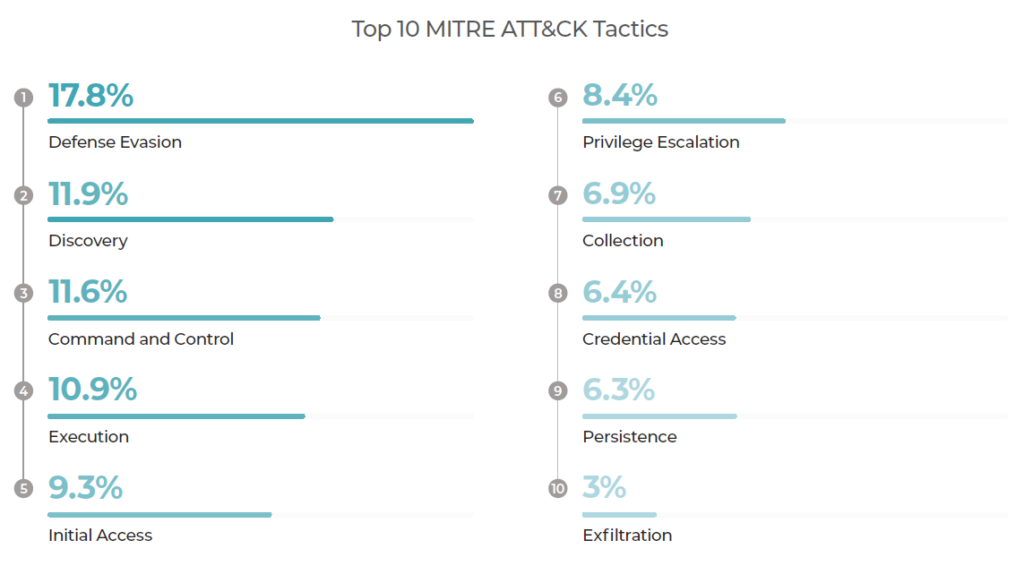
Lumu Compromise Report 2026
Once inside, an attacker effectively restarts the Kill Chain. To move from a compromised laptop to a critical server (known as lateral movement), they must repeat the steps of reconnaissance, exploitation, and installation.
This repetition gives the defender multiple chances to catch them.
A firewall cannot see this internal traffic (known as East-West traffic). It looks outward. To be active, you need tools that look inward. You need to see the network traffic that indicates a search is underway. Monitoring the hallway is just as important as locking the door.
How Does Automated Response Enable a ‘Zero Impact’ Strategy?
Automated response enables Zero Impact by removing the delay between detection and containment. The difference between a non-event and a headline news story is speed.
Relying on manual log analysis is reactive. Humans cannot sift through millions of queries before the window of opportunity closes. Automated Network Detection and Response (NDR) changes this timeline. Tools like Lumu assume contact will happen and monitor network metadata continuously. Lumu Autopilot adds the ability to automatically react to those incidents.
When a device talks to a known adversary, Lumu doesn’t wait. It integrates with your existing infrastructure, such as firewalls, EDRs, identity management, to isolate the threat immediately.
This denies the adversary the dwell time they need to move laterally, breaking the Kill Chain at the earliest link and turning a sophisticated attack into a dead end.
Why Are Firewalls and EDR No Longer Enough?
You cannot control every interaction that touches your network. A modern perimeter is too porous with BYOD policies and integration with the cloud. If you define success as Zero Contact, you will always feel like you are failing.
But that definition is wrong — success is Zero Impact. It means spotting the contact and isolating the device before the mission is completed. A breach doesn’t mean the battle is lost, it means it is time to respond.
To see exactly what to prepare for, you need the data.
Download the Lumu Compromise Report 2026 to uncover the specific tactics adversaries use to maintain dwell time, from anonymizers to droppers, and learn how to stop them before the damage is done.