

Table of Contents
Modern K-12 districts operate on a scale that rivals many enterprise corporations. However, the rapid move to 1:1 device initiatives (where schools provide each student with a dedicated, personal laptop) has created a dangerous security vacuum.
Traditional security tools often fail to monitor Chromebooks, leaving students vulnerable to sophisticated attacks that bypass standard web filters. Closing this gap requires a move from basic compliance to active network detection. For districts striving to meet the Trusted Learning Environment (TLE) standards, this visibility is a non-negotiable requirement for protecting student data privacy.
We talked to several tech teams on the frontline in schools and discussed how they navigate Chromebook security.
Quick Facts: Why Chromebooks create a security gap
|
Why Is Chromebook Security Different From Windows or Mac?
Chromebook security is unique because the ChromeOS architecture does not support the heavy software agents required by traditional Endpoint Detection and Response (EDR) tools. Most high-end security suites are designed for Windows, Mac, or Linux environments. Since you cannot install a standard antivirus agent on a Chromebook, these devices often exist as unmonitored endpoints on your network.
Tom Powers, IT Director at Marysville Schools, explains that securing these Chromebooks creates a significant challenge for modern school districts. “MDR, MXDR, or endpoint software like SentinelOne will take care of a Mac or Windows, but for a Chromebook, there is nothing really out there,” Powers says. “So, we have been looking for something to install on a Chromebook so we can have better visibility into what is happening.”
This gap is often misunderstood by leadership. Many schools rely on content filters to meet CIPA compliance for blocking adult content or gambling. However, these filters are not security tools. They rarely detect malicious traffic, such as Command and Control (C2) callbacks or background malware communication.
What Happens to Security When the Student Leaves the School Network?
School security policies often fail because firewalls are bypassed the moment a student connects to a home Wi-Fi network. Traditional on-site security hardware only protects devices within the physical boundaries of the school building. When a Chromebook device moves to a home router, it loses the protection of the school’s multi-layered defense system. This creates an open door for malware to infect the device in an unmonitored environment.
Paul Hieronymus, Director of Technology for North Ridgeville City Schools, emphasizes the need for consistent protection. “Having these devices when they are going home, we want that protection there too,” Hieronymus says. He notes that the risk remains the same regardless of the network being used. “It is our device, and we do need to try to make it as safe as possible.”
The Chromebook can be protected though. By utilizing an extension-based agent, IT teams can ensure that security protocols travel with the student. This approach provides a persistent layer of defense. It does not depend on a specific Internet Service Provider (ISP).
How Does a ChromeOS Security Extension Close the Visibility Gap?
A ChromeOS security extension closes the visibility gap by monitoring traffic metadata at the browser level and automatically killing malicious connections. Unlike heavy software that slows down hardware, a lightweight Network Detection and Response (NDR) extension identifies malicious behavior without impacting performance. It continuously captures network metadata and sends it to a central portal for analysis (importantly, without reading the actual content, thereby protecting student privacy).
Todd Wolfe, Systems Administration Manager at Meta Solutions, says that giving visibility into Chromebooks made Lumu stand out from the crowd. “Chromebooks are used almost exclusively in our school environments,” Wolfe says. “So having that agent that worked directly with each one of those endpoints, that was a very big driving factor for us.”
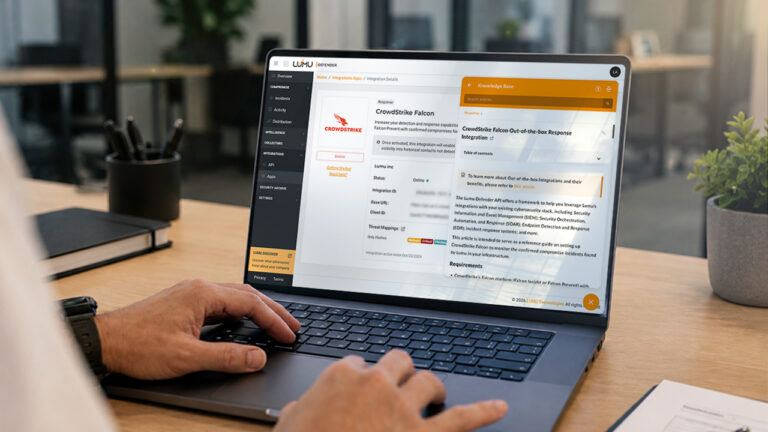
Administrators deploy the Lumu Agent for ChromeOS using a private alphanumeric identifier and a JSON activation code via the Google Admin Console. Paul Hieronymus says that deployment was simple for his team. “We deployed the app to all of our Chromebooks through our Google Workspace,” Hieronymus explains. “The Lumu team were able to walk us through the process and help us get it up and running very painlessly.”
Once active, the extension tracks all destinations of network requests. Tom Powers highlights how this visibility made a difference at Marysville Schools. “Lumu gave us that advantage to be able to see incidences,” Powers explains. “One of those incidences was students connecting to an IP address that was malware. It allowed us to be able to see what was going on, but also Lumu took action right away and killed that connection.”
Instead of hunting through thousands of IP logs, the team receives actionable intelligence. This allows IT directors to immediately stop the threat at the source.
Can a Small IT Team Really Manage Thousands of Student Devices?
Small IT teams can manage thousands of devices by using automated systems that prioritize threats and handle blocking independently. Most K-12 districts do not have the budget or headcount to employ a 24/7 security operations center. Instead, they rely on tools that can distinguish between a minor blip and a major network breach. This allows a lean staff to maintain high-level security without being overwhelmed by manual alerts.
Todd Wolfe refers to Lumu as a ‘set it and forget it’ model. He says this does not mean the network is unmonitored, rather that system is proactive, with automation being the key. If an extension detects a malicious site, it triggers an automated block via the firewall or API before a technician even sees the alert.
Michael Shuman, Director of Technology for Beaver Creek City Schools, manages a fleet of 10,000 Chromebooks. He points out that “If we have an issue where half of the students cannot use their Chromebooks, that is a real problem,” Shuman says. “The students need to use it every day.” For this reason, Shuman says, a small IT team needs an automated tool like Lumu. “If you do not have somebody helping you look at all of those incidents and point out what you should focus on, you could spend all day, every day just reading incidents.”
Why Should K-12 Districts Prioritize Network Visibility Now?
The threat landscape for student devices has shifted from simple content filtering to complex data theft. Traditional security perimeters are no longer enough to protect 1:1 initiatives. Without a way to monitor traffic on Chromebooks, districts remain blind to lateral movement and external threats. Strengthening the cyber stack with NDR ensures that student data stays protected regardless of where the device connects.
As school districts work to meet the Trusted Learning Environment standards for data privacy, the Chromebook blind spot can no longer be ignored. Leaders like Paul Hieronymus, Tom Powers, Todd Wolfe, and Mike Shuman have demonstrated that closing this gap does not require a massive staff or an enterprise-level budget — it just requires the right tool to automate the heavy lifting.
To find out more about what Lumu offers schools and organize a short demo, check out Cybersecurity for Schools.