
Table of Contents
As a security professional, you’re on the front lines. You face a constant stream of alerts and complex data. The pressure to investigate, report, and respond faster is relentless. You know there are critical insights buried in that data, but you lack the time and resources to uncover everything.
What if you had a powerful virtual assistant to do the heavy lifting for you?
This is no longer a dream. It’s now a reality. You can create that virtual analyst by combining a Large Language Model (LLM) with Lumu.
This guide provides a clear plan. We will dive into the details of how to set up your AI assistant. After that, we discuss three practical ways to use this method: creating automated reports, researching threats effectively, and as a guide for how to respond to alerts. With these skills you will become a faster and more strategic defender.
Unlocking Your AI Cybersecurity Partner
The ability to connect Lumu directly to an AI like Claude is a game-changer for security operations. The integration is enabled by a modern standard known as the Model Context Protocol (MCP). To understand it, think of it in three parts:
- The LLM agent (like Claude) is your brainy and hardworking assistant. A brilliant mind, but stuck in a virtual room with no access to the real world.
- The cybersecurity tool (Lumu) is the specialist with real-world security data.
- The MCP is the universal translator that allows them to communicate securely and effectively.
Why use an MCP? This creates a standard that moves us away from building temperamental, one-off integrations. With this type of connection, we create a single, robust connection, making the whole system more powerful and easier to manage.
Connecting Generative AI With Lumu: Your Quick-Start Guide
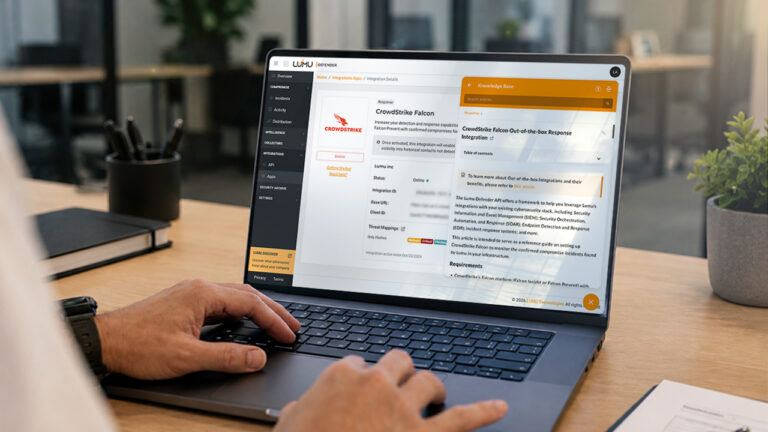
To enable your Generative AI to analyze Lumu’s findings, you first need to establish a connection. This guide details a powerful method for integrating these tools.
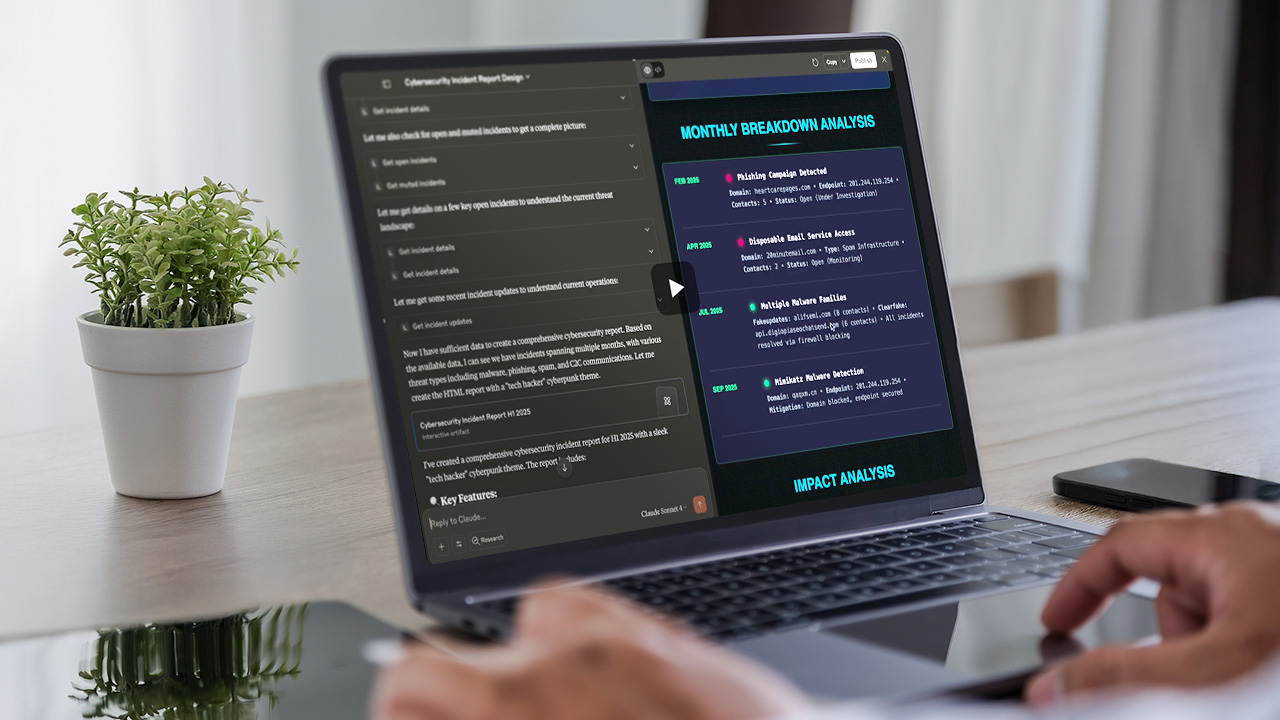
The best way to get started is to see it done. This technical walkthrough video guides you through the entire MCP connection process between Lumu and Claude.
For the complete, step-by-step guide mentioned in the video, please visit this GitHub page. Explore this link for examples of how to use the MCP connection, several useful command suggestions, and troubleshooting advice.
3 Ways To Augment Your Security Workflow With AI
Many have asked the question, “Will AI take over cybersecurity?” The reality we see, at least in this example, is augmentation of what we can do, not replacement. So, let’s look at how this works in practice.
How can connecting your cyber stack with generative AI improve your cybersecurity workflow? When you connect an LLM to a security tool like Lumu this produces a kind of AI analyst. A powerful new boost-up for your team. It automates tedious work and turns raw security data into decisive action.
Automate Reporting for Any Audience
Analysts spend too much time translating technical data for different audiences. By feeding raw incident data from Lumu into an LLM like Claude, you can instantly generate tailored reports. Create a high-level executive summary for a client’s leadership and a technical breakdown for their SOC team in seconds. This frees up your experts to focus on mitigation, not communication.
Accelerate Threat Research & Analysis
When a new threat appears, speed is critical. Instead of manually sifting through threat intelligence, AI agents for cybersecurity provide instant context. Feed an Indicator of Compromise (IoC) to the agent, and it immediately returns a detailed analysis of the threat actor. It explains their TTPs and maps them to MITRE ATT&CK. This shrinks investigation times from hours down to minutes.
Troubleshoot & Respond To Alerts Quickly
Complex alerts can overwhelm junior analysts. AI agents act as an instant interpreter. They can explain a technical alert in plain language and generate a step-by-step response playbook. This lowers your mean time to respond and standardizes your response process.
Watch this video to see these three use cases in action. See how an AI-Lumu copilot can transform your team’s daily workflow, from reporting to incident response.
Take Command With Your AI Copilot
Combining Lumu with AI can boost your abilities for reporting, research, and response. This future isn’t theoretical. It’s actionable.
Imagine. Instead of the slow, manual investigation of each compromise, you are triaging your entire incident queue in minutes. Instead of spending days on reports, you are advising clients with instant data-driven clarity. You are in command, confident, and always one step ahead.
The only thing left is to take the first step.
Remember that this MCP method only works with a full Lumu Defender account. If you don’t have yours yet, contact us for a live demo.